Understanding Advanced Urology Services
I like exploring topics outside my usual lane every now and then, and vasectomy reversal success rates are a good example of medical content I don’t often get to write about, but genuinely found fascinating. The detail about how much the timing since the original vasectomy affects outcomes, dropping from 97% patency within three years down to 71% after fifteen, was the kind of specific, real number that makes a piece like this actually useful rather than vague reassurance. It’s a good reminder that decisions like this deserve real data, not just a gut feeling either way.
Clinical Indications and Evaluation for Urology Services
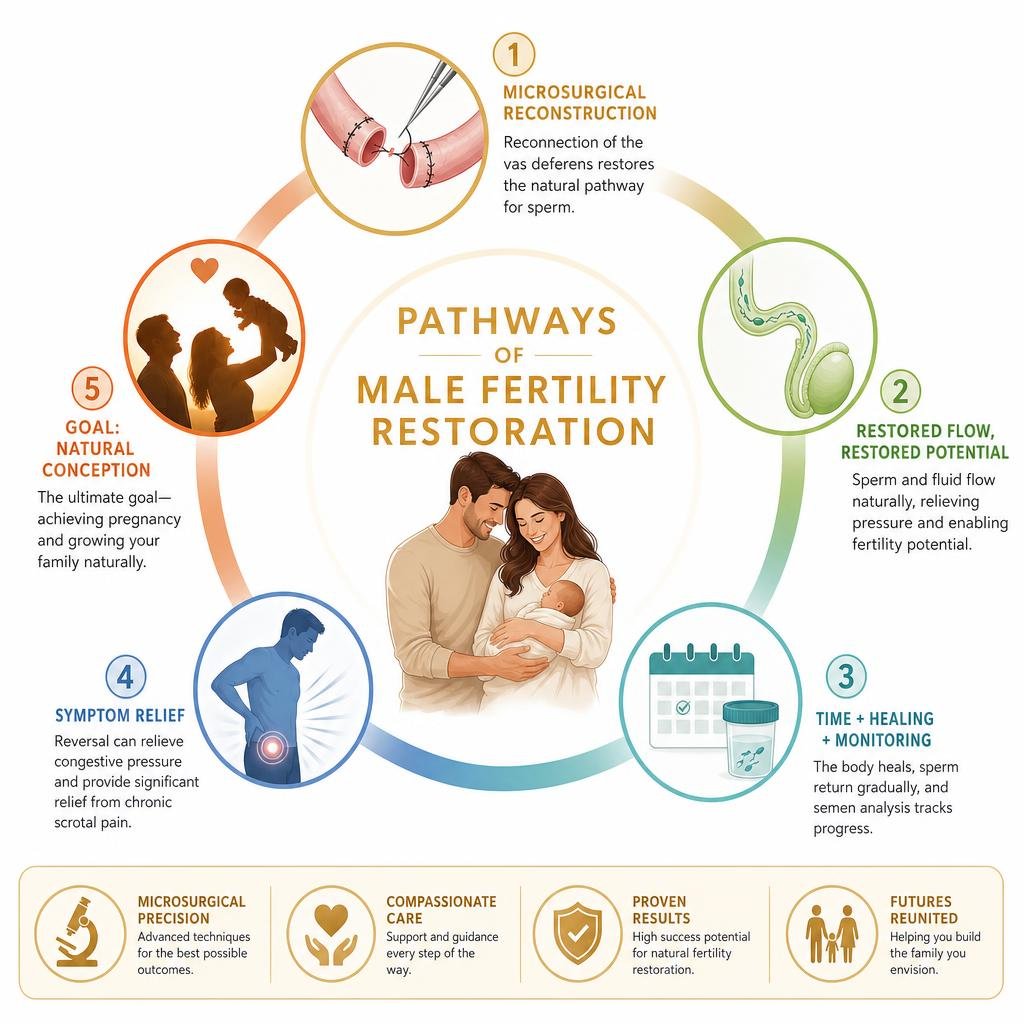
Many men choose a vasectomy for permanent birth control. However, life changes, and the desire to have more children can return. If you are considering reversing a vasectomy, you’re not alone. This advanced surgical procedure offers a real chance to restore fertility.
In this comprehensive guide, we will explore the intricate world of vasectomy reversal. We will delve into the factors that determine success rates. We will also examine the different surgical techniques available. Understanding these options is key to making informed decisions about your reproductive future.
We believe that every patient deserves clear, evidence-based information. Our goal is to outline the journey from initial evaluation to recovery. We will also compare vasectomy reversal with other fertility solutions. This article provides a foundational understanding of modern male reproductive care, emphasizing the importance of personalized innovative care.
When men consider reversing a vasectomy, it’s often due to significant life changes. These can include remarriage, the desire to expand a new family, or tragically, the loss of a child. For others, a change of heart regarding their family planning goals prompts the decision. Beyond the desire for more children, a subset of men seeks vasectomy reversal to alleviate chronic post-vasectomy pain syndrome (PVPS), a condition that can significantly impact quality of life. Understanding these diverse motivations is crucial for tailoring the right approach.
A critical initial step in this journey is a thorough patient selection process. This involves evaluating the man’s overall health, the duration since his original vasectomy (known as the obstructive interval), and his specific reproductive goals. We also place significant emphasis on evaluating the female partner’s fertility, as her age and reproductive health are paramount predictors of overall pregnancy success. A comprehensive physical examination of the male partner is also performed to assess the condition of the vas deferens and epididymis, providing vital anatomical insights before any surgical intervention.
Preoperative Assessment Protocols in Urology Services
A detailed preoperative assessment is fundamental to maximizing the success of a vasectomy reversal. This process goes beyond simply confirming the desire for fertility and delves into the intricate biological factors that influence outcomes.
One of the most decisive factors is the female partner’s age. Research consistently shows that while male age (even over 50) does not significantly impact patency rates after reversal, the female partner’s age is a strong predictor of live birth and pregnancy rates. Therefore, her ovarian reserve, typically assessed through tests like Day 3 Follicle-Stimulating Hormone (FSH) and estradiol levels, is a crucial component of the evaluation. For women over 35, a comprehensive fertility workup is often recommended to ensure there are no other underlying issues that could impede conception.
Another consideration is the presence of antisperm antibodies. Approximately 60% of men develop circulating antisperm antibodies after a bilateral vasectomy. While these antibodies can theoretically impair sperm function, routine preoperative antibody testing is not proven to be clinically predictive of pregnancy success after reversal. Therefore, while their presence is noted, they typically do not alter the surgical plan or prognosis significantly.
The male partner’s physical examination focuses on identifying the vasectomy site, assessing the quality of the vas deferens, and palpating the epididymis for any signs of swelling or tenderness. This, combined with a detailed fertility history from both partners, allows us to provide a realistic prognosis and develop a personalized treatment plan. This holistic approach ensures that all relevant factors are considered, reflecting our commitment to providing truly personalized innovative care.
Vasal Fluid Grading and Procedural Selection

Perhaps one of the most critical aspects of a vasectomy reversal occurs during the surgery itself: the intraoperative assessment of vasal fluid. This microscopic examination of the fluid from the testicular end of the vas deferens dictates the precise surgical technique required, making it a pivotal moment in the procedure.
During the surgery, once the vas deferens is opened, a small sample of fluid is collected and immediately examined under a microscope. The quality of this vasal fluid is graded, typically on a scale of 1 to 5:
- Grade 1: Contains abundant motile sperm. This is the most favorable finding, strongly indicating that the epididymis is clear of obstruction.
- Grade 2: Contains non-motile, but whole, sperm. This suggests sperm production is occurring, but there might be some back-pressure or a developing issue.
- Grade 3: Contains only sperm heads or fragments. This indicates more significant back-pressure or potential damage to the epididymis.
- Grade 4: Contains only thick, creamy fluid without any sperm (whole or fragmented). This is a strong indicator of an epididymal obstruction.
- Grade 5: Contains clear, watery fluid, completely devoid of sperm. This also points to a significant epididymal obstruction, often a “blowout” or rupture in the epididymal tubule caused by prolonged back-pressure from the vasectomy.
If motile sperm (Grade 1) or even whole, non-motile sperm (Grade 2) are identified, it suggests that the epididymis is patent, and a direct reconnection of the vas deferens—a vasovasostomy—is typically performed. However, if the fluid contains only sperm heads or fragments (Grade 3), or is completely devoid of sperm (Grades 4 or 5), it signals that a secondary obstruction has likely occurred in the epididymis due to chronic epididymal back-pressure. In these cases, a more complex procedure, a vasoepididymostomy, is required to bypass this blockage. This intraoperative decision-making is a cornerstone of modern microsurgical vasectomy reversal, ensuring the most appropriate and effective technique is applied for each patient.
Surgical Techniques: Vasovasostomy vs. Vasoepididymostomy
The success of vasectomy reversal hinges on highly specialized microsurgical techniques. Both vasovasostomy and vasoepididymostomy are delicate procedures performed under an operating microscope, which provides magnification up to 40 times, allowing the surgeon to work with structures as fine as a quarter the diameter of a human hair. Precision is paramount.
Key principles guide these microsurgical procedures. Techniques like microdot mapping are often employed to ensure accurate alignment of the tiny lumens of the vas deferens. Ultra-fine sutures, typically 9-0 and 10-0 monofilament nylon, are used to create a meticulous connection. The goal is always a precise mucosa-to-mucosa anastomosis, meaning the inner lining of the vas deferens is perfectly reconnected. Achieving a tension-free anastomosis is also critical, as any pulling on the delicate connection can lead to scarring and re-obstruction. Finally, careful attention is paid to vascular preservation to ensure adequate blood supply to the reconnected vasal ends, promoting optimal healing and long-term patency.
Microsurgical Vasovasostomy Approaches
Vasovasostomy is the more common of the two reversal procedures, performed when the vasal fluid analysis reveals the presence of sperm, indicating a clear epididymis. The primary goal is to precisely reconnect the two severed ends of the vas deferens.
There are generally two main approaches to microsurgical vasovasostomy:
- Formal Two-Layer Vasovasostomy: This technique involves two distinct layers of sutures. The inner layer meticulously connects the mucosal lining of the vas deferens, ensuring a watertight seal and perfect lumen alignment. The outer layer then approximates the muscularis and adventitial layers, providing structural support and reinforcing the anastomosis. This method is often considered the gold standard for its precision and robust connection.
- Modified One-Layer Vasovasostomy: Some experienced microsurgeons utilize a modified one-layer technique, where a single layer of sutures simultaneously approximates both the mucosa and the muscularis. While potentially faster, it still demands extreme precision to achieve optimal lumen alignment and a patent connection.
Regardless of the specific layering technique, the ultimate objective is to create a seamless, leak-proof connection that allows sperm to flow freely into the ejaculate. The patency kinetics—the timeline for sperm to return to the ejaculate—after a successful vasovasostomy can be relatively swift, often seen within weeks to a few months.
Vasoepididymostomy and Epididymal Bypass
When intraoperative vasal fluid analysis indicates the absence of sperm or the presence of only sperm fragments (Grades 3-5), it signifies an epididymal obstruction. This secondary blockage, often a “blowout” caused by years of back-pressure behind the original vasectomy site, necessitates a more complex procedure: a vasoepididymostomy (VE). This surgery effectively bypasses the obstructed segment of the epididymis by directly connecting the vas deferens to a healthy, sperm-containing tubule within the epididymis.
The epididymis is an incredibly delicate, tightly coiled tube, approximately 18 feet long, where sperm mature. Its tubules are microscopic, making VE one of the most technically challenging microsurgical procedures. Two common techniques are employed:
- Longitudinal Intussusception Vasoepididymostomy: In this technique, a small incision is made longitudinally into an epididymal tubule that is found to contain sperm. The vas deferens is then “intussuscepted” (telescoped) into this opening and secured with fine sutures.
- End-to-Side Vasoepididymostomy: Here, the end of the vas deferens is connected directly to the side of an epididymal tubule. This often involves creating a precise opening in the epididymal tubule and meticulously suturing the vas deferens to it.
Both techniques aim to create a direct, patent pathway for sperm to exit the epididymis and enter the vas deferens, bypassing the obstruction. Given the complexity and the delicate nature of the epididymal tubule, vasoepididymostomy generally has a longer recovery time for sperm to reappear in the ejaculate, sometimes taking up to 15 months.
Comparative Outcomes and Success Rates
Understanding the success rates of vasectomy reversal involves distinguishing between patency rates (return of sperm to the semen) and pregnancy rates. Both are significantly influenced by the specific surgical technique used, the obstructive interval, and the skill of the microsurgeon.
Here’s a comparative overview of typical outcomes:
Feature Vasovasostomy (VV) Vasoepididymostomy (VE) Patency Rate 85% to 90% (sperm return to semen) 84% (sperm return to semen) Pregnancy Rate 50% to 70% 42% Reobstruction 3% to 12% Approximately 21% Complexity Less complex, faster sperm return More complex, longer for sperm return (up to 15 months) Indication Motile sperm in vasal fluid, clear epididymis No sperm/sperm fragments in vasal fluid, epididymal obstruction The obstructive interval, or the time elapsed since the original vasectomy, is a major prognostic factor, particularly for vasovasostomy. As the time since vasectomy increases, the likelihood of secondary epididymal obstruction rises, often necessitating a more complex vasoepididymostomy.
Impact of Obstructive Interval on Vasovasostomy Outcomes:
Time Since Vasectomy Patency Rate Pregnancy Rate < 3 years 97% 76% 3–8 years 88% 53% 9–14 years 79% 44% ≥ 15 years 71% 30% 
These statistics highlight that while success rates do decline with time, even after 15 years, a significant percentage of men can achieve patency and pregnancy. However, the increased incidence of anastomotic scarring and re-obstruction risks, particularly after vasoepididymostomy, underscores the delicate nature of these procedures and the importance of expert microsurgical technique.
Navigating Treatment Pathways: Surgical Reconstruction vs. Assisted Reproduction
When couples seek to restore fertility after a vasectomy, they typically face two primary pathways: microsurgical vasectomy reversal (VR) or assisted reproductive technologies (ART) such as in vitro fertilization (IVF) combined with intracytoplasmic sperm injection (ICSI) using surgically retrieved sperm. The decision between these options involves weighing various factors, including cost-effectiveness, the desire for natural conception, cumulative pregnancy rates, and the female partner’s fertility status.
From a cost-effectiveness perspective, numerous analyses indicate that microsurgical vasectomy reversal often represents a more economical option per live birth compared to repeated cycles of IVF/ICSI, especially when the female partner is young and has good fertility. A successful reversal allows for natural conception, potentially leading to multiple pregnancies without the recurring costs and invasiveness of ART cycles.
Vasectomy reversal offers the unique advantage of restoring natural fertility, enabling couples to conceive spontaneously without medical intervention. This can lead to higher cumulative pregnancy rates over time compared to the single-cycle success rates of ART. However, ART, which involves sperm retrieval techniques like percutaneous epididymal sperm aspiration (PESA) or testicular sperm extraction (TESE), followed by IVF/ICSI, can offer a faster path to pregnancy, particularly when time is a critical factor due to advanced maternal age or other female fertility issues.
Expanding Access Through Specialized Urology Services

The choice between vasectomy reversal and assisted reproductive technologies (ART) is highly individualized, influenced by a combination of medical, personal, and financial considerations. Specialized urology services play a crucial role in guiding couples through this complex decision-making process.
Maternal Age: The female partner’s age is a significant determinant. For younger women (typically under 35), a successful vasectomy reversal offers the highest cumulative pregnancy rates and the benefit of natural childbearing. As maternal age advances, the success rates of both natural conception and ART decline, but ART might become a more direct and sometimes preferred route due to its faster timeline.
Financial Considerations: While vasectomy reversal is a one-time surgical expense, ART involves costs per cycle, which can quickly accumulate. Cost-effectiveness analyses frequently show that if a couple desires multiple children and the female partner has good fertility, vasectomy reversal is often the more financially prudent choice. However, insurance coverage varies widely, and some plans may cover ART but not reversal, or vice-versa, making detailed financial counseling essential.
Cryopreservation: Intraoperative sperm harvesting and cryopreservation during a vasectomy reversal is a controversial topic. Some specialists advocate for it as a “backup plan” in case the reversal fails, providing sperm for future IVF/ICSI. Others argue it’s not cost-effective or routinely necessary, especially with high success rates of reversal. We carefully discuss this option with patients, weighing the potential benefits against the added cost and invasiveness.
Multiple Pregnancies and Natural Childbearing: A primary advantage of a successful vasectomy reversal is the ability to achieve multiple natural pregnancies. This aligns with many couples’ desire for natural childbearing and avoids the physical and emotional toll of repeated ART cycles. The procedural invasiveness is also a factor; while reversal is a surgery, it’s a single event aimed at restoring natural function, whereas ART involves ongoing medical procedures.
Specialized urology services are equipped to provide comprehensive counseling on these factors, helping couples make an informed decision that aligns with their family goals and circumstances.
Post-Vasectomy Pain Management and Repeat Interventions
Beyond fertility restoration, vasectomy reversal can also serve as a therapeutic intervention for chronic post-vasectomy pain syndrome (PVPS). This debilitating condition, characterized by persistent testicular pain, often stems from congestive epididymitis—a build-up of sperm and fluid pressure within the epididymis due to the obstruction created by the vasectomy.
For men suffering from PVPS, vasectomy reversal offers a potential solution by decompressing the epididymis and restoring the natural flow of sperm. Studies indicate that over 80% of men who undergo vasectomy reversal specifically for PVPS experience significant pain relief. The procedure alleviates the pressure that contributes to congestive orchialgia and can resolve the chronic scrotal pain. Careful surgical technique, including meticulous nerve preservation, is also crucial during the reversal to avoid exacerbating pain.
In cases where an initial vasectomy reversal fails to restore patency, or if re-obstruction occurs, repeat vasectomy reversal procedures are an option. While more challenging due to scar tissue from the previous surgery, success rates for repeat operations are still encouraging. Among 222 repeat vasectomy reversal procedures, sperm returned to the semen in 75% of men, and 43% of their partners subsequently conceived. Factors contributing to operative failures in the first instance often include significant scar tissue formation at the anastomosis site or the development of new epididymal blowouts. During a repeat reversal, the surgeon will carefully excise any scar tissue and may need to perform a vasoepididymostomy if an epididymal obstruction is identified, even if the initial procedure was a vasovasostomy.
Postoperative Recovery, Monitoring, and Complication Protocols
The journey after a vasectomy reversal is as crucial as the surgery itself for ensuring optimal outcomes. Careful adherence to postoperative care instructions is vital for proper healing, minimizing complications, and maximizing the chances of success.
Immediately following the procedure, patients are advised to wear a scrotal supporter continuously for several weeks to provide support and reduce swelling. Cryotherapy, typically using wrapped ice packs intermittently for the first 24-48 hours, is highly recommended to manage swelling and discomfort, and to aid in hematoma prevention.
Physical restrictions are imposed to protect the delicate surgical site. Patients should avoid strenuous physical activity, heavy lifting, and any activities that could strain the groin area for at least 3-4 weeks. For desk jobs, a return to work might be possible within 5-7 days, but for physically demanding roles, up to two weeks off may be necessary. Sexual abstinence, including masturbation, is typically recommended for 2-3 weeks to allow the anastomosis to heal completely and prevent disruption.
Monitoring the success of the reversal involves a structured semen analysis schedule. The first semen analysis is usually performed 6-8 weeks post-surgery, and then every 2-3 months thereafter until sperm count and motility normalize. This regular monitoring helps track the return of sperm to the ejaculate, assess its quality, and determine the long-term patency of the reconnection. Potential complications, though rare, include hematoma, infection, and persistent pain. Patients are advised to contact their healthcare provider if they experience excessive swelling, severe pain, fever, or signs of infection. Through diligent postoperative care and consistent monitoring, we aim for sustained sperm return and optimal reproductive outcomes.
Frequently Asked Questions About Vasectomy Reversal
We understand that couples considering vasectomy reversal often have many questions. Here, we address some of the most common inquiries to provide clarity and set realistic expectations.
How does the time elapsed since vasectomy affect reversal success rates?
The obstructive interval, or the length of time since the original vasectomy, is one of the most significant prognostic factors for reversal success. While modern microsurgical techniques can achieve patency even decades after a vasectomy, success rates generally decrease with increasing time.
For vasovasostomy, patency rates can be as high as 97% if reversed within 3 years, with pregnancy rates around 76%. However, for reversals performed 15 or more years after the vasectomy, patency rates drop to about 71%, and pregnancy rates to 30%. This decline is primarily due to the increased likelihood of epididymal blowouts and secondary obstructions caused by chronic back-pressure on the epididymis. When these epididymal blockages occur, a more complex vasoepididymostomy is required, which inherently has slightly lower patency and pregnancy rates compared to a straightforward vasovasostomy. Therefore, while reversal is possible at any interval, earlier intervention generally offers better pregnancy potential.
What is the recovery timeline following microsurgical reconstruction?
Recovery from a microsurgical vasectomy reversal involves several stages to ensure proper healing and maximize success:
- Initial Downtime: Most patients require 2-3 days of strict rest, with intermittent ice application to the scrotum to minimize swelling and discomfort.
- Return to Work: For individuals with desk jobs, returning to work within 5-7 days is often feasible. Those with physically demanding occupations should plan for up to 2 weeks off.
- Physical Restrictions: Strenuous physical activity, heavy lifting, and vigorous exercise should be avoided for 3-4 weeks.
- Sexual Abstinence: To protect the delicate surgical site and allow the anastomosis to heal, sexual activity, including ejaculation, is typically restricted for 2-3 weeks.
- Semen Monitoring: The first semen analysis is usually performed 6-8 weeks post-surgery, followed by subsequent analyses every 2-3 months until sperm parameters stabilize and normalize. Sperm may reappear in the ejaculate within weeks, but it can take 6-12 months, or even longer after a vasoepididymostomy, for optimal sperm counts and motility to return.
Can vasectomy reversal effectively resolve post-vasectomy pain syndrome?
Yes, vasectomy reversal can be a highly effective treatment for post-vasectomy pain syndrome (PVPS). This chronic pain condition often results from congestive orchialgia, where sperm and fluid build up behind the vasectomy site, creating increased pressure within the epididymis.
By reconnecting the vas deferens, a vasectomy reversal provides surgical decompression, allowing the sperm and fluid to flow naturally again. This alleviates the pressure that contributes to the pain. Clinical data indicates that over 80% of patients who undergo vasectomy reversal specifically for PVPS experience significant or complete resolution of their chronic scrotal pain. The procedure aims to restore physiological flow, providing symptomatic relief. Careful microsurgical technique, including meticulous attention to nerve preservation, is essential to maximize the chances of pain resolution.
Conclusion
The decision to undo a vasectomy is a significant one, often driven by profound life changes and evolving reproductive goals. Modern microsurgical techniques offer a highly effective pathway to fertility restoration, providing hope for natural conception to many couples. From the meticulous preoperative evaluation to the intricate intraoperative decision-making between vasovasostomy and vasoepididymostomy, every step is geared towards achieving long-term patency and successful pregnancies.
While factors like the obstructive interval and female partner’s age play crucial roles in prognosticating success, the advancements in microsurgical precision mean that even after many years, a vasectomy reversal can yield positive outcomes. Furthermore, for those suffering from post-vasectomy pain syndrome, the procedure offers a tangible solution for symptomatic relief. We are committed to providing comprehensive guidance and advanced surgical care, empowering individuals and couples to make informed choices about their reproductive future.