
The Importance of Comprehensive Mental Health Services

Core Components of Comprehensive Mental Health Services
Effective mental health care, especially for complex conditions like depression, rarely relies on a single approach. Instead, we recognize the power of evidence-based care delivered through multimodal treatment strategies. This means combining various therapeutic techniques and interventions, each proven effective, to address the unique needs of an individual. The goal is to achieve superior clinical outcomes by fostering a strong therapeutic alliance—a collaborative, trusting relationship between the client and their treatment team.
Comprehensive services often involve a blend of psychotherapy, medication management, and, in some cases, advanced neuromodulation. This integrated approach acknowledges that mental health challenges are multifaceted, influenced by biological, psychological, and social factors. By addressing these various dimensions simultaneously, we can create a more robust and sustainable path to recovery.
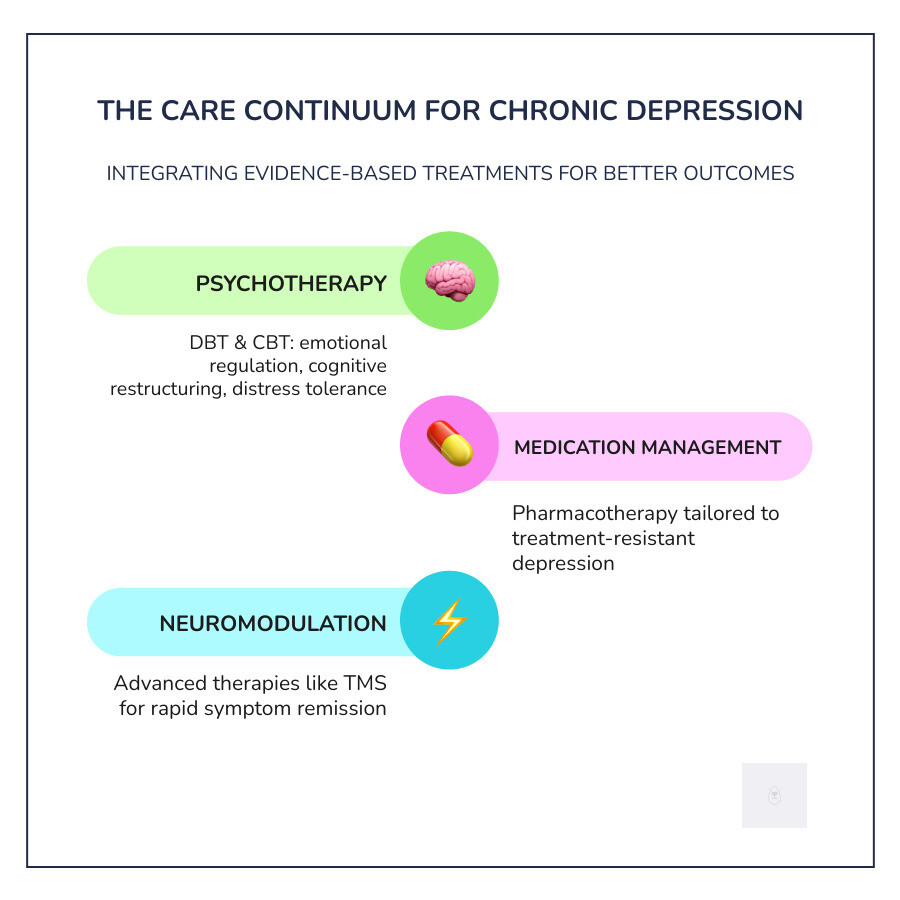
Dialectical Behavior Therapy and Cognitive Behavioral Frameworks
When considering psychotherapeutic interventions for depression, two prominent frameworks often come to the forefront: Cognitive Behavioral Therapy (CBT) and Dialectical Behavior Therapy (DBT). While both are highly effective and share some foundational principles, their approaches and primary targets differ significantly.
Cognitive Behavioral Therapy (CBT) is widely recognized as a gold-standard, first-line treatment for many mood and anxiety disorders. It operates on the premise that our thoughts, feelings, and behaviors are interconnected. CBT primarily focuses on identifying and changing unhelpful thinking patterns (cognitive restructuring) and behavioral habits that contribute to depressive symptoms. For instance, if an individual habitually interprets neutral events negatively, CBT helps them challenge these thoughts and develop more balanced perspectives. It’s a structured, problem-solving approach often completed within 8 to 20 sessions, making it suitable for those seeking a logical, symptom-focused intervention.
Dialectical Behavior Therapy (DBT), while incorporating many CBT techniques, takes a more emotion-centered approach. Originally developed by Dr. Marsha Linehan for Borderline Personality Disorder, its efficacy has expanded to a broader range of conditions, including depression, particularly where emotional dysregulation is a central feature. DBT’s core philosophy emphasizes a “dialectical” balance between acceptance and change. It teaches individuals to accept their current reality and emotions while simultaneously working to change unhelpful behaviors and patterns.
The foundational DBT principles are structured around four key skill modules:
- Mindfulness: Focusing on the present moment without judgment, helping individuals observe their thoughts and feelings rather than being consumed by them.
- Distress Tolerance: Learning to cope with intense, painful emotions without resorting to destructive behaviors.
- Emotional Regulation: Understanding, identifying, and managing intense emotions to reduce vulnerability to mood swings and improve emotional stability.
- Interpersonal Effectiveness: Developing skills to communicate needs, set boundaries, and maintain healthy relationships, reducing conflict and isolation.
While CBT primarily targets thought patterns and offers change mechanisms through cognitive restructuring, DBT integrates these with acceptance strategies like radical acceptance and validation, recognizing that some aspects of reality cannot be immediately changed. For depression, particularly when it involves chronic rumination, intense emotional swings, or interpersonal difficulties, DBT’s comprehensive skill set can be profoundly impactful. Therapists often blend CBT cognitive techniques with DBT skills, using CBT for thought restructuring and DBT for mindfulness and distress tolerance, to address layered concerns.
Integrating Psychiatric Care and Medical Interventions
For many individuals struggling with depression, especially those with moderate to severe symptoms or treatment-resistant depression (TRD), psychotherapy alone may not be sufficient. This is where the integration of psychiatric care and medical interventions, primarily pharmacotherapy, becomes critical.
Antidepressant medications work by influencing neurotransmitters in the brain, helping to stabilize mood and reduce the biological underpinnings of depression. For patients whose depression significantly impacts their daily functioning, medication can provide the necessary relief to engage more effectively in therapy and daily life. As of September 2026, research continues to affirm the importance of medication as a foundational element in many depression treatment plans.
The evidence is particularly compelling when considering combination protocols. A significant finding highlights that older adults with chronic depression who completed DBT treatment alongside taking medication showed a 71% remission rate after a year, compared to only 47% in the medication-only group. This statistic underscores the synergistic power of combining psychotherapy with pharmacology. The medication can alleviate severe symptoms, making it easier for individuals to learn and apply the complex skills taught in DBT, leading to higher rates of symptom remission and improved long-term outcomes.
Choosing the right medication and managing its effects is a nuanced process that requires specialized expertise. For those navigating the complexities of medication, understanding the available options and how they interact with therapeutic approaches is key. Further insights into this crucial aspect of care can be found in resources discussing psychiatric medication management. This collaborative approach ensures that both the psychological and biological facets of depression are addressed comprehensively.
Advanced Therapies: Bridging Psychotherapy and Neuromodulation
Beyond traditional psychotherapy and pharmacotherapy, the landscape of mental health treatment continues to evolve, incorporating advanced interventions that offer new hope, especially for individuals with treatment-resistant depression. Among these, neuromodulation therapies have emerged as powerful tools, and one notable example is intermittent theta burst stimulation (iTBS).
iTBS is a form of transcranial magnetic stimulation (TMS), an FDA-cleared treatment for major depressive disorder. What makes iTBS particularly compelling is its efficiency: it delivers comparable benefits to conventional TMS in just a fraction of the time. While traditional TMS sessions can last up to 40 minutes, iTBS can achieve its therapeutic effects in approximately three minutes per session. This significantly reduces the time commitment for patients, making treatment more accessible and less disruptive to daily life.
The therapy works by using magnetic pulses to stimulate specific areas of the brain, most commonly the left dorsolateral prefrontal cortex (DLPFC), which is often underactive in individuals with depression. This stimulation helps to rebalance neural activity, leading to improvements in mood and other depressive symptoms.
Research, including systematic reviews published as recently as 2026, indicates that iTBS is effective in reducing depressive symptoms, even in patients with comorbid anxiety. Response rates typically range from 30% to 60%, with remission rates between 10% and 40% across various studies. These are significant figures for a population that has often exhausted other treatment avenues. The rapid response observed with iTBS, sometimes within days of treatment initiation, offers a crucial advantage for individuals experiencing severe and debilitating depression.
The true power of iTBS, like other advanced therapies, lies in its potential for clinical synergy when combined with psychotherapy. While iTBS can rapidly alleviate severe symptoms, creating a window for therapeutic engagement, psychotherapies like DBT can then equip individuals with the skills to maintain these gains, prevent relapse, and build long-term resilience. This integration represents a holistic approach, where biological interventions pave the way for psychological growth and skill acquisition.
The Role of Comprehensive Mental Health Services in Treatment-Resistant Depression
Treatment-resistant depression (TRD) is a profound challenge in mental health care, affecting approximately 30% of Major Depressive Disorder patients. These individuals have not responded adequately to at least two different antidepressant treatments, often leading to prolonged suffering and functional impairment. For this population, comprehensive mental health services are not just beneficial; they are often essential for achieving meaningful recovery.
A comprehensive approach for TRD moves beyond sequential trials of medication or therapy, instead opting for a strategic combination of interventions. This might involve optimizing pharmacotherapy, integrating specialized psychotherapies like DBT, and considering advanced treatments such as neuromodulation.
The effectiveness of these multimodal strategies is often measured using validated clinical scales. For instance, studies frequently track improvements in Hamilton Rating Scale for Depression (HAM-D) scores, Beck Depression Inventory (BDI) scores, and Montgomery-Åsberg Depression Rating Scale (MADRS) reductions. Research protocols, even those published in 2026, continue to investigate the additive benefits of DBT for TRD, with preliminary findings indicating significantly greater improvements in HAM-D and BDI scores when DBT skills training is combined with medication, compared to medication alone. Similarly, accelerated iTBS protocols have demonstrated significant MADRS reductions, with response rates up to 50% in pilot studies.
The table below illustrates the potential difference in outcomes when comprehensive, multimodal treatment protocols are employed compared to standard, single-modality care for TRD.
| Treatment Protocol | Typical Response Rate | Typical Remission Rate | Key Benefits DBT is not just a combination of CBT and mindfulness; it’s a comprehensive approach that validates clients’ experiences while simultaneously challenging them to change behaviors. This dialectical tension—accepting what is while striving for what can be—is what makes DBT uniquely effective for individuals struggling with overwhelming emotions and self-destructive patterns.
Tailoring Comprehensive Mental Health Services for Complex Demographics
Effective mental health care recognizes that “one size fits all” simply doesn’t work. Comprehensive mental health services are adaptable, tailoring interventions to meet the specific needs of diverse populations. This individualized approach is particularly vital for groups such as older adults, adolescents, and individuals with co-occurring conditions like Autism Spectrum Disorder (ASD).
For older adults grappling with chronic depression, the integration of DBT has shown remarkable success. As noted earlier, a study found that 71% of older adults with chronic depression who engaged in DBT treatment along with medication achieved remission after a year, a significantly higher rate than those on medication alone. This highlights DBT’s capacity to provide specific skills for managing emotional distress, enhancing interpersonal connections, and improving overall quality of life in this age group, where depression can often be overlooked or misdiagnosed.
Adolescent care presents its own unique challenges, often involving intense emotional swings, identity formation struggles, and increased vulnerability to self-harm or suicidal ideation. A meta-analysis published by September 2026 confirms that DBT interventions significantly lower symptoms of depression in teens, including self-injury. The skills-based nature of DBT—mindfulness, emotional regulation, distress tolerance, and interpersonal effectiveness—provides adolescents with concrete tools to navigate these turbulent years, fostering resilience and healthier coping mechanisms.
For individuals on the Autism Spectrum Disorder (ASD), depression can be a significant comorbidity. Traditional therapies may need adaptation to suit their unique communication styles and sensory sensitivities. Recent systematic reviews and meta-analyses, current as of September 2026, indicate that DBT-based interventions can significantly reduce depressive symptoms and suicidal ideation in individuals with ASD. Interestingly, the research suggests that shorter DBT sessions (60 minutes or less) might be more effective for improving emotional regulation in this population, likely due to reduced cognitive load and sensory overwhelm. This insight allows for more effective tailoring of treatment delivery.
Beyond individual and group therapy, comprehensive services also emphasize crucial supportive elements:
- Crisis planning: Developing clear, actionable strategies for individuals to manage acute emotional distress or suicidal urges. This often includes identifying triggers, coping strategies, and support systems.
- Group skills training: A cornerstone of DBT, these groups provide a structured environment for learning and practicing new skills, offering peer support and reducing feelings of isolation. This format allows individuals to apply skills in a safe, supportive setting and receive feedback.
By adapting and integrating these components, comprehensive mental health services ensure that care is not only effective but also accessible and relevant to the diverse needs of the community.
Essential DBT Skills for Breaking Cycles of Chronic Depression
Chronic depression often traps individuals in cycles of rumination, avoidance, and emotional overwhelm. Dialectical Behavior Therapy (DBT) provides a powerful toolkit of skills designed to interrupt these patterns and build a life worth living. These skills are practical, actionable, and, with consistent practice, can fundamentally change how individuals experience and respond to their emotions.

Here are some essential DBT skills particularly effective for breaking cycles of chronic depression:
- Mindfulness: The foundation of all DBT skills, mindfulness teaches individuals to observe their thoughts, feelings, and sensations in the present moment without judgment. For depression, this means learning to notice rumination without getting swept away by it.
- One Mindful: This specific mindfulness skill involves focusing your attention entirely on a single activity or sensation. For example, when washing dishes, notice the temperature of the water, the feel of the soap, the sound of the suds. By engaging fully in the present, “One Mindful” helps to reduce overthinking and anchors you in reality, making everyday moments feel more manageable and less dominated by depressive thoughts.
- Distress Tolerance: This module is crucial for managing intense, painful emotions that might otherwise lead to destructive coping mechanisms or withdrawal. It teaches individuals how to get through a crisis without making things worse.
- Radical Acceptance: This skill involves fully acknowledging and accepting reality as it is, even if it’s painful, without judgment or resistance. For chronic depression, this can mean accepting the presence of difficult emotions or challenging circumstances rather than fighting against them, which often intensifies suffering. It’s not about approval, but about recognizing what is.
- TIPP Skills: A set of techniques to quickly reduce intense emotional arousal:
- Tip the temperature of your face with cold water (e.g., splashing cold water on your face or holding ice cubes).
- Intense exercise (e.g., running, jumping jacks) for a short burst.
- Paced breathing (slow, deep breaths).
- Paired muscle relaxation (tensing and relaxing muscle groups).
- Self-Soothing: Engaging the five senses to comfort oneself in a crisis (e.g., listening to calming music, drinking a warm beverage, smelling a pleasant scent).
- Emotional Regulation: These skills help individuals understand, identify, and manage their emotions more effectively, reducing vulnerability to intense or prolonged negative moods.
- Opposite Action: When experiencing an emotion that is unhelpful or unwarranted for the situation (e.g., wanting to withdraw when feeling sad but needing connection), this skill involves acting in the opposite way. If depression urges you to isolate, the opposite action might be to call a friend or go for a walk. This can effectively change the emotional response.
- Accumulating Positives: This skill involves intentionally engaging in activities that create positive emotions, even small ones, to build a reserve of positive experiences. Depressed individuals often stop doing things they once enjoyed. By consciously spending a few minutes each day on enjoyable activities (listening to music, getting fresh air, noting something you’re grateful for), you can gradually rewire the brain to notice and experience more joy, counteracting depressive inertia.
- Interpersonal Effectiveness: Depression often strains relationships, leading to isolation or conflict. These skills help individuals communicate their needs, set boundaries, and maintain self-respect while building and maintaining healthy relationships.
- DEAR MAN: A mnemonic for effectively asking for something or saying no: Describe the situation, Express feelings, Assert your needs, Reinforce the positive outcome, Mindful of your goals, Appear confident, Negotiate.
- Cognitive Skills (from CBT, often integrated into DBT):
- Check the Facts: When experiencing an intense negative thought, this skill involves systematically examining the evidence for and against that thought. For example, if a depressive thought says, “I’m a complete failure,” you would ask: “What are the facts that support this? What are the facts that contradict this?” This helps differentiate between emotions and objective reality, reducing catastrophic thinking and fostering a more balanced perspective.
By consistently practicing these skills, individuals with chronic depression can learn to navigate intense emotions, challenge unhelpful thoughts, engage more fully in life, and ultimately break free from the debilitating cycles of their condition.
Frequently Asked Questions About Depression Care
How does DBT differ from traditional CBT for chronic depression?
While both Dialectical Behavior Therapy (DBT) and Cognitive Behavioral Therapy (CBT) are evidence-based psychotherapies that aim to alleviate depressive symptoms, their core philosophies and primary mechanisms of change differ significantly. Traditional CBT primarily focuses on cognitive restructuring – identifying and challenging unhelpful thought patterns to change emotional and behavioral responses. It’s a highly structured, logical approach that emphasizes changing what you think.
DBT, on the other hand, embraces a “dialectical” approach, balancing acceptance focus with change. While it incorporates CBT techniques, DBT places a much stronger emphasis on emotional dysregulation and teaches skills for managing intense, overwhelming emotions. It helps individuals accept their current reality and emotions without judgment, simultaneously providing skills to change unhelpful behaviors. Key differences include DBT’s dedicated modules for distress tolerance (coping with crises without making things worse) and mindfulness (present-moment awareness), which are less central in traditional CBT. DBT is often preferred when depression is accompanied by intense emotional swings, self-harm, or chronic interpersonal difficulties.
What makes multimodal care more effective for treatment-resistant depression?
Multimodal care, which integrates various evidence-based treatments, is significantly more effective for treatment-resistant depression (TRD) because it addresses the condition from multiple angles, leading to synergistic outcomes. TRD often stems from a complex interplay of biological, psychological, and social factors that a single treatment modality cannot fully resolve.
By combining approaches such as optimized pharmacotherapy, specialized psychotherapies like DBT, and potentially neuromodulation integration (e.g., iTBS), we can target different aspects of the illness simultaneously. For example, medication can stabilize neurochemical imbalances, psychotherapy can teach coping skills and address underlying psychological patterns, and neuromodulation can directly modulate brain activity. This comprehensive strategy not only improves symptom reduction but also enhances relapse prevention, as individuals develop a broader toolkit for managing their mental health. The coordinated effort across different treatments often yields results that are greater than the sum of their individual parts, offering a more robust and sustainable path to recovery for those who have not responded to conventional approaches.
How long does a standard intensive DBT program typically last?
A standard, comprehensive DBT program for depression typically lasts between six months and a year, though the exact duration can vary based on individual needs and the intensity of symptoms. It is designed as an intensive, structured treatment that includes several components:
- Individual Therapy: Weekly one-on-one sessions with a DBT-trained therapist, focusing on applying skills to real-life situations, addressing therapy-interfering behaviors, and enhancing motivation.
- Group Skills Training: Weekly sessions, often lasting 2-2.5 hours, where participants learn the four core DBT modules: Mindfulness, Distress Tolerance, Emotional Regulation, and Interpersonal Effectiveness. This component is crucial for acquiring new coping strategies.
- Crisis Coaching: Patients have access to their individual therapist for phone coaching between sessions, particularly during moments of crisis, to help them apply skills in real-time.
- Consultation Team Meetings: The DBT therapists themselves meet regularly to support each other, ensure treatment fidelity, and enhance their skills.
After completing the core program, some individuals may opt for booster or maintenance sessions to reinforce learned skills and prevent relapse. The emphasis is on acquiring and consistently practicing skills, which is a process that requires dedication and time to integrate into daily life.
Conclusion
The journey through depression, particularly when it becomes chronic or treatment-resistant, can be profoundly isolating and challenging. However, as we have explored, the landscape of mental health care in September 2026 offers increasingly sophisticated and effective solutions. The importance of comprehensive mental health services cannot be overstated. By embracing integrated pathways that combine evidence-based psychotherapies like DBT, optimized pharmacotherapy, and advanced interventions such as neuromodulation, we can create truly personalized and impactful treatment plans.
DBT’s unique blend of acceptance and change, delivered through practical skills in mindfulness, distress tolerance, emotional regulation, and interpersonal effectiveness, empowers individuals to break cycles of rumination and avoidance. When combined with medication, it has shown remarkable success, even in challenging demographics like older adults. Furthermore, the strategic integration of therapies like iTBS offers rapid symptom reduction, paving the way for deeper therapeutic engagement.
Achieving long-term recovery from depression is a collaborative effort. It requires a dedicated treatment team, a commitment to learning and practicing new skills, and a belief in the possibility of a life worth living. Through collaborative treatment and personalized support, we can navigate the complexities of depression, fostering resilience, and guiding individuals toward renewed calm, energy, and hope.


