The Future of Stem Cell Therapy in Cancer Treatment

Stem cells have amazing abilities, like being able to divide and change into different types of cells. These abilities open up many possibilities for progress in cancer treatment.
Even though there are problems, the way research is going now and how it will go in the future could lead to better cancer medicines that are more effective, more personalized, and less harmful.
This article talks about where stem cell therapy is now and where it might go in the future as a way to treat cancer. It shows the progress that has been made and the important road that lies ahead.
Developments in Stem Cell Technology
Although stem cell treatments appear like a recent invention, they have been used for many years to treat uncommon forms of blood cancer.
About 60 years ago, pioneers like Dr. Edward Donnall Thomas investigated their potential in bone marrow transplants, hence beginning the path of stem cell research.
A major turning point in stem cell research came in 2007 when Kyoto University’s Dr. Shinya Yamanaka developed a method to transform adult cells into induced pluripotent stem cells (iPSCs).
Though they don’t entail the ethical issues of using real embryos, these iPSCs have similar properties to embryonic stem cells.
This discovery opened up new avenues of inquiry into the several uses for stem cells, from fighting diseases to regrowing tissues.

Notwithstanding these developments, there is still much to learn in this fascinating sector, which makes it a rich ground for the next medical revolution.
More studies will help to clarify the possibilities of stem cell treatment in treating several diseases, including cancer.
Advancement Towards Enhanced Cancer Treatments
New therapy possibilities arise from stem cells’ capacity to self-regenerate and morph into other cell types.
Here’s how stem cells are making an impact:
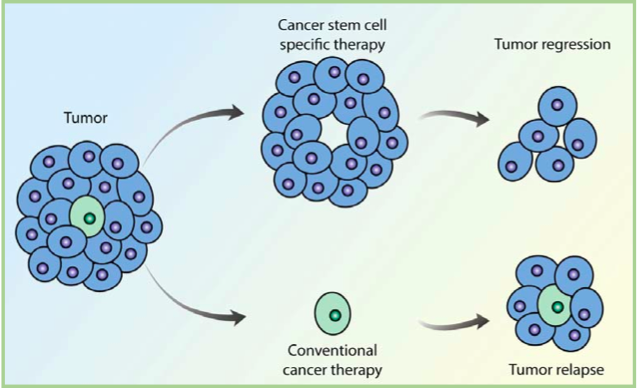
- Scientists are looking at medicines that zero in on CSCs, thought to be in charge of cancer relapse. Targeting these cells allows us to potentially improve survival rates.
- Stem cells’ genes are being changed by researchers to increase their efficiency in fighting cancerous cells. More efficient treatments could follow from this genetic modification.
- Stem cells provide a stage for testing new cancer treatments, accelerating the path to safe and effective therapies.
- Stem cells could possibly rebuild tissues harmed by severe treatments like chemotherapy, lowering some of the negative side effects of cancer treatment.
- Stem cells could open the path to tailored medicines meant to fit every patient’s individual cancer genetic profile, enhancing the efficacy of therapy.
Although studies on stem cell therapy for cancer treatment are still in progress, the possibility for revolutionary developments gives promise for the future of less harmful and more efficient cancer treatments.
Understanding Cancer Stem Cells

Within malignancies, cancer stem cells (CSCs) are a special subpopulation of cells. They are identical to normal stem cells and are essential for the growth of cancer as well as for its resistance to therapy.
Unlike most cancer cells, CSCs may regenerate themselves and change into several kinds of cells inside a tumor.
CSCs have piqued the interest of scientists due to their role in tumor formation and progression, as well as their resistance to current treatments.
These stem cells may spread and adapt to adverse settings regardless of where they are in the body, thus mutations and alterations in their DNA can accumulate over time, making them more harmful.
CSCs, despite accounting for only a small amount of a tumor, are particularly resistant to standard treatments. Targeting these cells specifically may result in changes in cancer treatment approaches and better patient outcomes.
New Approaches to Stem Cell Usage
Exciting new stem cell therapies are pushing the limits of cancer treatment. Researchers are devising novel approaches, such as the ‘Trojan horse’ procedure, in which cancer stem cells are modified to turn against other tumor cells.
Differentiation therapy presents a promising approach. This method forces cancer stem cells to develop into mature, non-cancerous cells, stopping their relentless multiplication.
Another cutting-edge technique involves genetically changing stem cells to recognize and attack cancer cells more effectively, enhancing the effectiveness of treatment.
Mesenchymal stem cells, produced from bone marrow, can be programmed to deliver drugs directly to cancer cells.
Researchers are also using stem cells to make miniature organ-like structures known as organoids to test potential treatments and gain a better understanding of cancer behavior.
Cancer Treatment Using Differentiation Therapy
Differentiation therapy uses cancer stem cells’ forced maturation into non-cancerous cells. This throws off their uncontrollably fast multiplication.
This strategy generates several possible advantages:
- It has shown good success in treating aggressive blood cancers such as acute promyelocytic leukemia.
- It is less hazardous since it focuses on changing the characteristics of cancer cells rather than eliminating them.
- It also opens up new therapeutic options for cancer types that are resistant to standard treatments.
Although differentiation therapy shows considerable promise, additional research is needed to fully understand its possibilities and potential limitations in the greater field of cancer treatment.
Challenges in Stem Cell Research
From an ethical standpoint, the usage of embryonic stem cells raises moral concerns regarding the status of embryos.
In a laboratory environment, technically preserving stem cell health and stability is a difficult chore since these cells sometimes spontaneously specialize and alter form.
From a scientific standpoint, identifying the particular signals that cause a stem cell to differentiate or grow into another kind presents one of the main difficulties. The complexity of these signals — which incorporate several elements that scientists do not quite understand — adds to the challenge.
Stem cells’ potential to create malignancies from unchecked division and expansion raises still another issue. Scientists are working nonstop to control this process.
Another challenge is the possibility that should stem cells be obtained from another person, the patient’s immune system will reject them. Moreover, it is quite difficult to get enough stem cells required for treatment.
Advances in Developing Cancer Treatments

Nowadays, researchers are concentrating on cancer stem cells (CSCs). Scientists want to develop treatments that stop CSCs from self-renewal and lead them to mature into non-cancerous cells by deciphering how these cells proliferate and outsmart medications.
New treatments also seek to upset the comfortable surroundings that enable CSC growth.
Immunotherapy is a developing discipline making great strides. Strategies such CAR T-cell therapy and immune checkpoint inhibitors improve the body’s immune response to CSCs.
These revolutionary developments point to a future in cancer treatment that will offer more effective and customized therapy choices.