
How to Get the Most Out of Parent-Child Classes (Without Putting Pressure on Your Child)
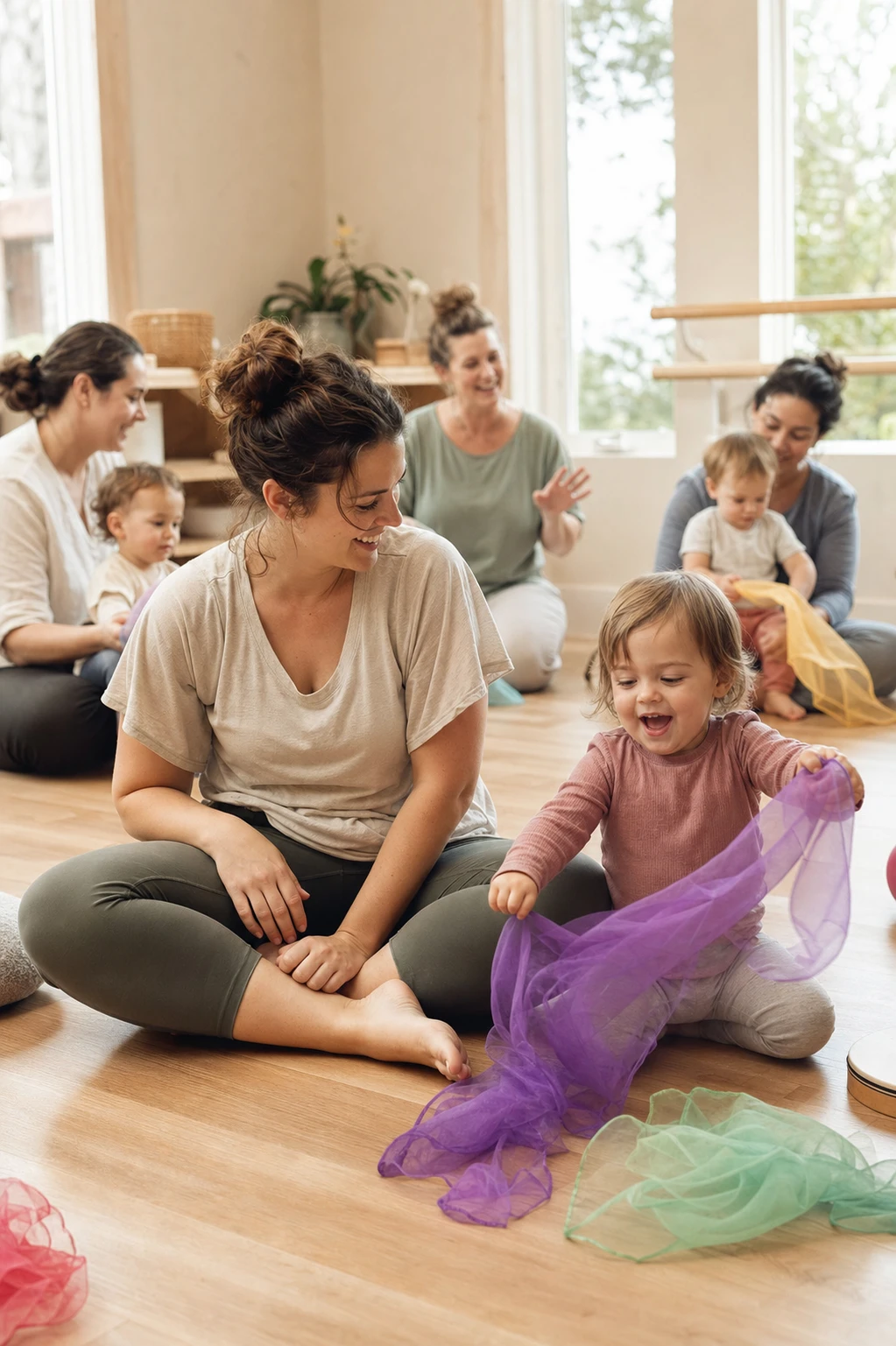
You sign up for a parent-child class with a lovely picture in your mind. Your little one will clap along with the music and copy the teacher’s movements, maybe even discover a new talent along the way. You will share a meaningful hour together before heading home with a smiling, pleasantly tired child.
Then the first class arrives.
Your toddler refuses to leave your lap. Or they spend twenty minutes investigating a doorstop while every other child appears to be following directions. Perhaps they cry during the welcome song, grab someone else’s shaker, or announce that they want a snack five minutes after the class begins.
This does not mean the class was a failure.
Parent-child classes can support learning and confidence, but their value isn’t limited to what you can see or measure. They create connection. They give your week a rhythm. And they put you in a room with other caregivers going through the exact same stage of life.
The key is to approach these classes with realistic expectations and choose an experience that works for your whole family.
Redefine What a Successful Class Looks Like
Adults tend to measure activities by what gets accomplished. Did we complete the project? Did we learn the song? Did my child follow the instructions?
Babies and toddlers don’t experience classes the same way. They might be watching the other kids, or quietly deciding whether the teacher feels safe. Some are still taking in sounds they’ve never heard before. A child sitting quietly on a caregiver’s lap may still be absorbing a great deal.
Instead of asking whether your child participated perfectly, ask something else. Did you enjoy some time together? Did your child notice something new, even if they didn’t join in? Was there one moment of laughter, curiosity, or connection you’d have missed by staying home?
A class does not need to produce a new skill every Tuesday morning to be worthwhile.
Focus on Connection, Not Performance
It is easy to turn even playful activities into another opportunity for comparison. One child is already singing the words. Another can balance without help. Someone else’s toddler sits peacefully during the entire story.
Meanwhile, your child is rolling across the floor or asking to go home.
Parent-child classes are not auditions, and they are not tests of anyone’s parenting. Their greatest value often comes from shared attention: singing face-to-face, holding hands during a movement activity, making a wonderfully messy painting, or laughing when neither of you understands what comes next.
Your child does not need to become a miniature musician, swimmer, gymnast, or artist. The class can simply be a regular place where the two of you do something enjoyable together.
When connection becomes the goal, both parent and child can relax.
Choose an Activity That Matches Your Child
The class everyone recommends may not be the best class for your particular child.
An energetic toddler who loves climbing might thrive in gymnastics or movement classes. A child fascinated by sounds may enjoy music. A cautious preschooler might feel more comfortable at storytime or in a small art group, somewhere the structure is predictable enough to feel safe.
Temperament matters as much as age. Consider whether your child tends to enjoy noise, movement, new people, physical touch, and large spaces. Think about whether they jump into unfamiliar situations or prefer to observe before joining.
This does not mean children should only do what already feels easy. Gentle exposure to new experiences can be valuable. However, there is a difference between an encouraging challenge and an environment that overwhelms a child every week.
Look for a class that offers enough familiarity to feel safe and enough novelty to remain interesting.
Prioritize a Convenient Location
A fantastic class can become surprisingly difficult when it requires a long drive, complicated parking, or a frantic race through traffic.
Parents sometimes focus so heavily on finding the “best” program that they overlook the value of convenience. In practice, a good class ten minutes away may benefit your family more than an exceptional one across town. You are more likely to attend consistently, arrive in a calm mood, and have enough energy left for the rest of the day.
Before committing to a demanding journey, explore Mommy and Me classes nearby and compare options by location, age group, and activity type.
Proximity also makes it easier to meet families who live in your area. The parent sitting next to you may visit the same playground, library, or neighborhood café. That gives a casual class friendship a better chance of developing into a real local connection.
Work With Your Family’s Natural Rhythm
A class scheduled during naptime may be difficult no matter how engaging the teacher is. The same is true of an activity that begins when your child is usually hungry or when an older sibling needs to be collected from school.
Before enrolling, look honestly at your family’s existing rhythm. Consider travel time, parking, snacks, naps, diaper changes, and how much transition time your child typically needs.
Try to avoid creating a schedule that requires everyone to be rushed and perfectly organized just to arrive on time. The class should support family life, not leave the entire household recovering from it.
Ask about trial sessions, make-up policies, and drop-in options too. A little flexibility can remove much of the pressure when young children are involved.
Let Your Child Participate in Their Own Way
Some children imitate an instructor immediately. Others watch for several weeks before joining. Both responses can be normal ways of becoming comfortable in a new setting.
Model participation without demanding it. Sing the song yourself, roll the ball, clap along, or make the hand motions. Invite your child to join, but avoid repeatedly correcting or coaxing them in front of the group.
When possible, offer small choices: “Would you like the blue scarf or the yellow one?” or “Do you want to sit beside me or on my lap?” A manageable choice can help a hesitant child feel more secure.
There will also be moments when your child needs a break. Stepping to the side for a cuddle or a drink of water does not ruin the experience. Sometimes a brief pause is exactly what allows a child to return.
Give Familiarity Time to Develop
The first session may tell you very little about how your child will eventually feel about a class.
Everything is new: the room, teacher, music, equipment, other children, and expectations. Even an outgoing child can turn cautious. A reserved child might need several visits before moving past the caregiver’s lap.
Unless something feels unsafe or clearly wrong for your child, give it a few more sessions before deciding. Predictability can change the experience. Once children recognize the welcome song, know where the toys are kept, and understand what happens next, they often become more willing to explore.
Progress shows up in small ways. A child who watched from the doorway last week might sit inside this week. Next time, they touch an instrument, or copy one movement. Those quiet steps deserve to be noticed without becoming another source of pressure.
Remember That the Class Is for Caregivers Too
Parent-child classes are often discussed entirely in terms of children’s development. Yet caregivers may gain just as much from them.
Caring for a baby or toddler can be joyful and intensely isolating. A recurring class offers a reason to leave the house, a change of scenery, and regular contact with other adults. Even a five-minute conversation with someone who understands disrupted sleep, picky eating, or toddler negotiations can make the day feel lighter.
The class may also introduce you to local resources, playgrounds, family events, and practical recommendations. Over time, seeing the same faces each week can create a reassuring sense of belonging.
You do not have to become best friends with everyone. Simply being recognized and welcomed can matter during a demanding season of parenthood.
Help the Village Grow Beyond the Class
Community rarely appears fully formed. It often begins with small, slightly awkward conversations.
Arrive a few minutes early rather than rushing through the door at the last second. Ask another caregiver how old their child is or whether they have attended before. If you regularly talk with someone, suggest meeting at a nearby playground after class.
These interactions do not need to become immediate friendships. Familiar faces are valuable on their own. Over time, however, a weekly music group or storytime can become the beginning of playdates, shared advice, and genuine support.
This is one reason recurring local classes can be particularly helpful. They provide repeated, low-pressure opportunities for both children and adults to become comfortable with one another.
Know When to Switch or Stop
Giving a class time does not mean forcing it indefinitely.
The schedule may be wrong. The environment may feel too loud, crowded, competitive, or rigid. Your child might simply dislike the activity. You may discover that the effort required to attend outweighs what your family receives from it.
Stopping does not mean your child failed, and it does not mean you gave up too quickly. Sometimes the most useful information a class provides is a clearer understanding of what your family needs.
Try a different activity, choose another time of day, or take a break for a few months. Young children change quickly. Something that feels impossible now may become enjoyable later.
Let the Experience Be Enough
Parent-child classes don’t have to accelerate development or uncover a hidden talent to earn a place in your week.
Maybe your child ends up loving music. Maybe they meet a friend, or you do. Or maybe the whole thing just gives you a reason to get out of the house on a Tuesday morning, tired kid and all.
Any of that is enough.
Pick something close by. Let your child move at their own pace. Skip the perfection. What you’ll remember later probably won’t be what your child learned in that room. It’ll be the two of you, showing up together, week after week.


