
How to Choose the Right Natural Stone for Every Room
Between the restaurant and a house full of kids, dogs, and chickens, learning how to choose natural stone for your home made me realize how much I’ve been picking materials based purely on looks without thinking about how they’ll actually hold up. Marble sounds beautiful until you remember four kids and a countertop meeting acidic foods on a daily basis, and that’s exactly the kind of practical detail this piece gets right. It’s a good reminder that the prettiest slab in the showroom isn’t always the smartest choice once real life starts happening on top of it.
Table of Contents
- Why Natural Stone Still Works
- How to Match Stone to the Room
- Comparing Popular Stone Types
- Choosing Color and Finish
- Checking Durability and Daily Use
- Planning, Cleaning, and Maintenance
- Veining, Slabs, and Layout
- Common Mistakes to Avoid
- A Simple Selection Process
Natural stone can make an interior feel grounded, distinctive, and built to last, but the right choice depends on far more than appearance. Whether you are comparing slabs for a kitchen renovation or selecting tiles for a bathroom, experienced marble suppliers Sydney can help you assess how each material will perform in the specific space.
The most successful result balances visual impact with practical needs. Consider moisture, heat, foot traffic, cleaning habits, available light, fabrication details, and the amount of natural variation you are comfortable seeing before falling in love with a particular slab.
Why Natural Stone Still Works
Natural stone is valued because no two pieces are exactly alike. Mineral movement, veining, tonal shifts, fossils, and small surface variations give a room character that manufactured finishes cannot precisely duplicate. Current interiors often use stone beyond standard benchtops, including full-height splashbacks, fireplace surrounds, bathroom walls, floors, bar fronts, and custom furniture details.
Warmer neutrals, earthy browns, soft greens, deep blues, and expressive multicolored slabs can all work well when they suit the home’s architecture. Rather than treating stone as a decorative afterthought, use it to guide the entire palette of a room.
How to Match Stone to the Room
Kitchen Applications
Kitchens demand the most from stone surfaces. Islands, worktops, splashbacks, and breakfast bars may be exposed to hot cookware, oils, acidic foods, dropped utensils, and frequent cleaning. A busy family kitchen may suit a resilient, forgiving material and a finish that does not reveal every fingerprint. More delicate stone can still be a beautiful choice, particularly for splashbacks or low-contact areas, as long as its care requirements are understood.
Bathroom Applications
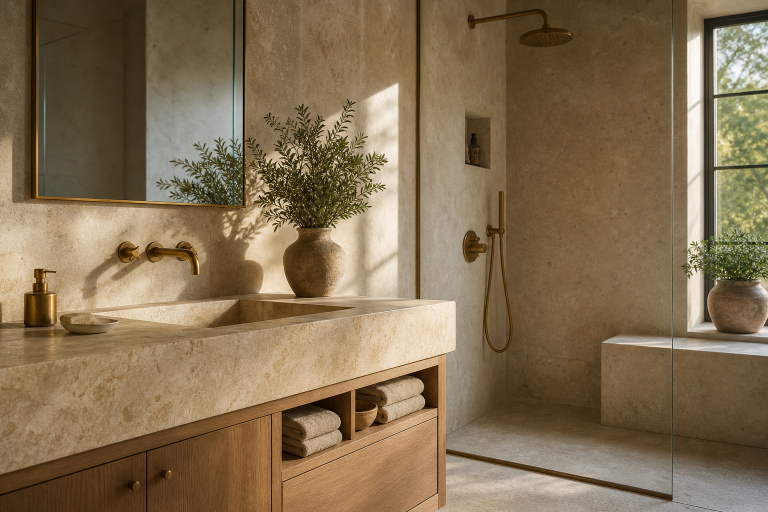
Bathrooms introduce water, steam, soaps, cosmetics, and slip considerations. Stone works beautifully on vanities, basin surrounds, shower walls, bath surrounds, and floors, but the finish matters. Honed or textured finishes can provide a softer look and may be more appropriate for wet floors than highly polished surfaces. Good ventilation, suitable sealing, and practical grout layouts also help protect the finished space.
Feature Walls and Living Areas
In living spaces, stone can create a strong focal point without covering every available surface. Consider a fireplace surround, an entry wall, a stair detail, a media wall, or a shelving niche. Light is especially important here, since daylight and warm evening lighting can bring out completely different tones and patterns within the same slab.
Comparing Popular Stone Types
- Granite: A practical option for kitchens, floors, and some outdoor applications. Granite’s coarse-grained mineral structure contributes to its strong, durable character, although color variation and finish should still be evaluated on a slab-by-slab basis.
- Marble: Ideal for vanities, bathrooms, walls, and statement surfaces where distinctive veining is the priority. It can etch or stain, so it suits owners who appreciate a surface that develops character over time.
- Quartzite: Often chosen for islands and kitchen worktops because it can combine visual depth with strong performance. Confirm the exact material and recommended care, as names used in the stone market can vary.
- Limestone: Offers a soft, relaxed appearance for floors, walls, and bathrooms. Its porosity means product selection and cleaning habits need careful attention.
- Travertine: Brings warmth and texture to floors, bathrooms, and feature walls. Decide whether a filled or unfilled finish best suits the desired look and maintenance plan.
- Onyx: Best reserved for dramatic features, bar fronts, vanities, and backlit applications. It needs thoughtful support, careful fabrication, and gentler everyday use.
Choosing Color and Finish
Always evaluate stone alongside cabinetry, flooring, wall paint, and hardware. Light slabs make small rooms appear larger, darker ones add contrast and depth. Bring samples into your space, as showroom lighting differs from home lighting. Finish impacts both look and feel: polished reflects light and emphasizes color; honed has a softer, low-sheen finish; leathered adds texture and reduces glare; brushed or tumbled give an aged, relaxed appearance. When exposed to heat and pressure, limestone transforms into marble, which also explains why different stones can have such varied visual qualities and care needs.
Checking Durability and Daily Use
Durability is not determined by the stone name alone. Thickness, edge profile, support structure, installation quality, finish, and maintenance all influence performance. Before committing, ask these practical questions:
- What activities will happen on or near this surface?
- Will it be exposed to heat, standing water, sunlight, acids, or heavy traffic?
- How visible would scratches, stains, etching, or chips be in the chosen finish?
- What thickness, substrate, and support does the fabrication require?
- What daily and long-term care is recommended?
Planning Cleaning and Maintenance
Use cleaners designed for natural stone instead of household sprays, which may be unsafe. Acidic or abrasive products can harm surfaces like calcite-based stones. Wipe spills quickly, dry wet areas, dust floors regularly, and follow sealing advice. Understanding staining versus etching is helpful: staining absorbs into the stone, while etching is a chemical surface change, often dulling or lightening the surface. Different stones like marble, limestone, travertine, quartzite, granite, and onyx require specific care.
Using Veining, Slabs, and Stone Layout
Choose a full slab when possible, not just a small sample. Natural features like movement, mineral deposits, open areas, and color shifts add to its appeal. A quiet slab suits a calm kitchen, while a dramatic one can be the focal point of a powder room or fireplace wall. Plan the vein direction before fabrication. Bookmatching, splashbacks, waterfall edges, and aligned joins can change the look. Mark sink, cooktop, outlets, joins, and edges early to keep the best stone visible.
Common Mistakes to Avoid
- Choosing a stone only because of its color.
- Ignoring moisture, heat, traffic, and cleaning demands.
- Making a decision from a very small sample.
- Forgetting to allow for joins, cut-outs, and slab availability.
- Using harsh products that can harm the surface.
- Skipping professional measurement, support, and installation checks.
A Simple Stone Selection Process
- Define the application, whether it is a benchtop, floor, vanity, wall, splashback, or feature.
- Set performance priorities for water, heat, traffic, impact, and cleaning.
- Choose a visual direction for color, veining, texture, and finish.
- Inspect suitable full slabs in natural and artificial light.
- Confirm fabrication details, including thickness, edges, joins, cut-outs, and support.
- Review the full budget, including supply, fabrication, transport, installation, sealing, and future care.
Final Thoughts
The right natural stone should look beautiful and work comfortably with everyday life. By considering the room, intended use, finish, maintenance needs, slab layout, and lighting from the start, you can select a surface with enduring appeal and a place in the home that feels intentional.


