
Creating a Comfortable and Quiet Home Environment
The Core Pillars of Year-Round Home Comfort
 Our homes are more than just buildings; they are our personal sanctuaries. They are places where we unwind, reconnect, and feel safe. Yet, true home comfort extends far beyond a simple thermostat setting. It involves a careful blend of elements that shape our daily experiences.
We know that a well-balanced living space greatly impacts our health and happiness. It influences everything from our sleep quality to our daily energy levels, even supporting a comfortable home workout energy. The indoor environment profoundly affects us.
In this extensive guide, we will explore the critical factors that contribute to a truly comfortable and quiet home. We will examine the interplay of temperature, humidity, and air quality. We will also dive into modern HVAC technologies, smart control systems, and essential maintenance routines. Our aim is to help you create an indoor oasis that is both efficient and peaceful, enhancing your overall well-being.
Achieving optimal home comfort is a sophisticated dance between several key environmental factors. While temperature often takes center stage, it’s merely one component of a holistic comfort strategy. We must consider temperature stability, humidity control, and indoor air quality as the foundational pillars that collectively create a truly comfortable living space. These elements not only influence our physical sensation of comfort but also significantly impact our health and overall well-being.
The concept of “felt temperature” is crucial here; it’s not just what the thermometer reads, but how the combination of air temperature, radiant heat, humidity, and air movement makes us feel. For instance, high humidity can make a moderate temperature feel much warmer, sometimes by as much as 8 degrees, because it inhibits the body’s natural cooling process through sweat evaporation. Conversely, very low humidity can make a room feel colder and cause discomfort like dry skin or respiratory irritation.
Maintaining proper humidity levels is vital for respiratory health and allergen reduction. Excessive moisture creates an ideal breeding ground for mold, mildew, and dust mites, which are common allergens and can exacerbate respiratory conditions. On the other hand, managing humidity helps prevent these issues and keeps the air feeling fresh and clean. Understanding these dynamics is the first step toward effectively managing your home’s environment for year-round comfort. For a deeper dive into managing various aspects of your home’s comfort, the Department of Energy offers comprehensive resources on Managing Your Home’s Comfort.

The Impact of Humidity and Air Quality on Home Comfort
Humidity, often overlooked, plays a critical role in our perception of comfort. It refers to the amount of water vapor present in the air. When humidity is high, the air feels heavy and sticky, and our bodies struggle to cool down through perspiration because the air is already saturated with moisture. This high vapor pressure can lead to discomfort, even at moderate temperatures. Conversely, very low humidity can dry out nasal passages, skin, and even wooden furniture. Experts generally recommend maintaining indoor humidity levels between 40-60% for optimal comfort and health. This range discourages the growth of mold and dust mites while preventing excessive dryness.
Indoor air quality (IAQ) is equally important. Our homes, while offering shelter, can also trap a variety of airborne pollutants. These include dust, pollen, pet dander, mold spores, volatile organic compounds (VOCs) from cleaning products and furnishings, and even virus-sized particles. Research indicates that indoor pollutant levels can be two to five times higher than outdoors. Poor IAQ can lead to a range of health issues, from allergies and asthma flare-ups to headaches and fatigue. Effective ventilation rates are essential to dilute these pollutants and bring in fresh outdoor air. However, simply opening windows isn’t always feasible due to outdoor pollution, allergens, or extreme temperatures. This is where advanced filtration systems and dedicated indoor air quality solutions become indispensable. For more information on the benefits of improving indoor air quality and overall home performance, ENERGY STAR provides valuable insights into Comfort.
Thermal Equilibrium and Personal Home Comfort
Thermal equilibrium refers to the state where the heat generated by our bodies is balanced with the heat lost to the environment, resulting in a comfortable sensation. This balance is influenced by several factors, including the ambient air temperature, radiant heat from surfaces, and air movement. Our bodies constantly generate heat; in fact, the average human produces as much heat as a 100-watt light bulb. When the environment is too warm, our bodies struggle to dissipate this metabolic heat, leading to discomfort. When it’s too cold, we lose heat too quickly.
Maintaining this equilibrium within a home relies heavily on effective heat transfer management. This involves preventing unwanted heat gain in summer and heat loss in winter. Insulation integrity is paramount. Well-insulated walls, attics, and floors act as barriers, slowing down heat transfer between the inside and outside. Similarly, high-performance windows and doors minimize heat loss through conduction and convection.
Another critical aspect is draft elimination. Drafts, often caused by air leaks around windows, doors, and electrical outlets, create localized cold spots and disrupt the thermal balance, making a room feel colder than the thermostat indicates. Sealing these leaks is a cost-effective way to improve comfort and energy efficiency. By addressing insulation and sealing, we create a more stable indoor environment, reducing the workload on our heating and cooling systems and ensuring consistent thermal comfort throughout the home.
Modern HVAC Technologies and System Selection
The heart of any comfortable home is its Heating, Ventilation, and Air Conditioning (HVAC) system. Modern HVAC technologies have evolved significantly, offering more efficient, precise, and environmentally friendly ways to manage indoor climates. From traditional central air systems to innovative heat pumps and ductless solutions, understanding the various options is crucial for making informed decisions about your home’s comfort infrastructure.
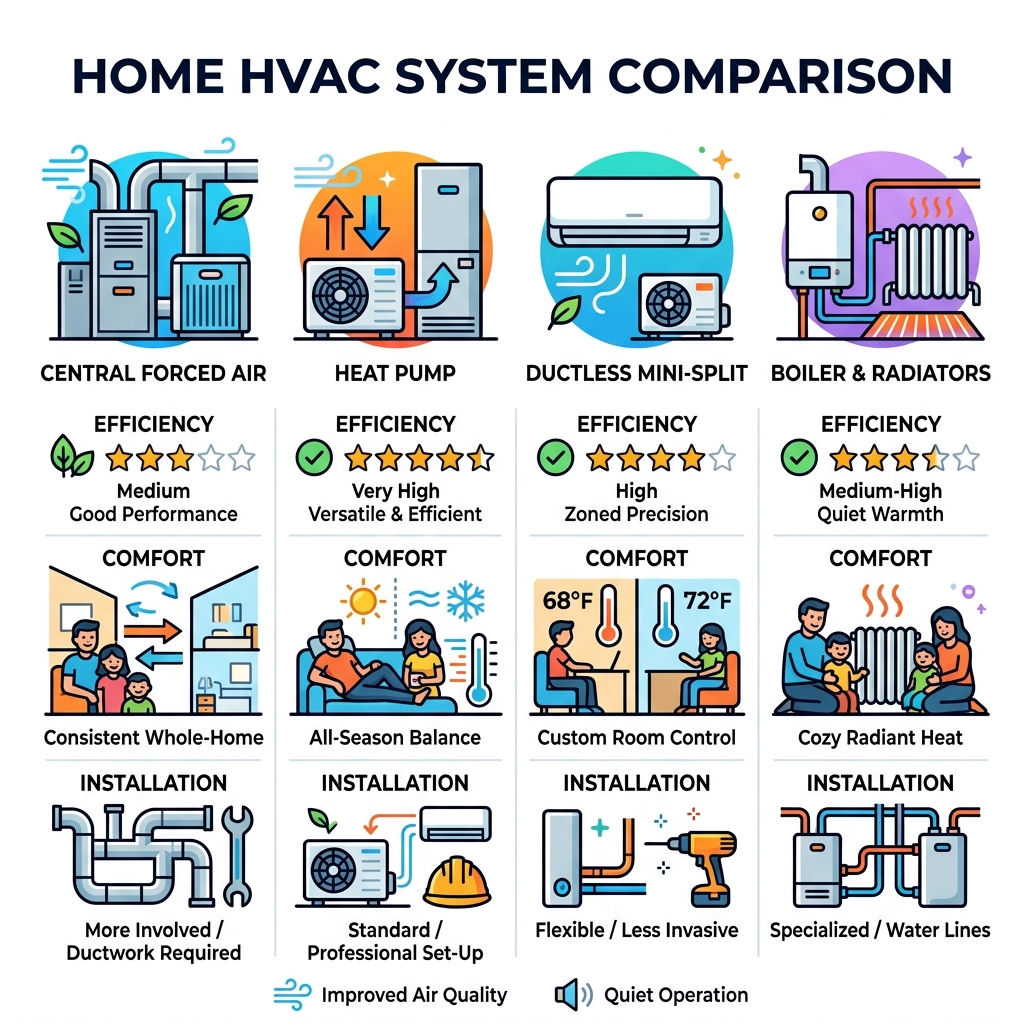
Central air conditioning systems, typically split systems with an outdoor condenser and an indoor air handler, remain a popular choice for whole-home cooling. Furnaces, powered by natural gas, oil, or electricity, are the workhorses for heating in many regions. Modern furnaces can achieve impressive efficiencies, with some models converting 96-99% of their energy into usable heat.
Heat pumps represent a versatile and increasingly popular technology. Unlike furnaces that generate heat, heat pumps transfer heat. In winter, they extract heat from the outside air (even cold air contains heat) and move it indoors. In summer, they reverse the process, moving heat from indoors to outdoors. This heat transfer mechanism makes them highly energy-efficient, especially in moderate climates, and contributes to decarbonization efforts by reducing reliance on fossil fuels.
Ductless mini-splits offer a flexible solution for homes without existing ductwork or for additions and zoned comfort. These systems consist of an outdoor compressor unit connected to one or more indoor air handlers, each controlling a specific zone. They provide both heating and cooling, offering precise temperature control for individual rooms. The choice among these systems often hinges on factors like climate, existing infrastructure, budget, and desired level of energy efficiency. For a comprehensive overview of various options, the Home comfort systems: Ultimate Guide 2025 can be a valuable resource.
Choosing the Right System for Home Comfort
Selecting the appropriate HVAC system for your home is a significant decision that impacts both comfort and long-term operating costs. It’s not a one-size-fits-all scenario; several factors must be carefully considered.
Firstly, a professional load calculation is essential. This detailed assessment determines the precise heating and cooling requirements of your home, taking into account its size, layout, insulation levels, window types, and local climate. Oversized systems cycle on and off too frequently, leading to uneven temperatures, higher energy bills, and premature wear. Undersized systems struggle to maintain desired temperatures, especially during peak demand.
Secondly, climate zones play a critical role. In colder climates, a high-efficiency furnace or a cold-climate heat pump might be most suitable. In warmer, humid regions, an air conditioner with excellent dehumidification capabilities or a heat pump designed for those conditions would be preferred.
Modern systems also offer advanced features like variable-speed compressors and fans. Unlike older, single-stage systems that operate at full capacity or off, variable-speed units can precisely adjust their output to match the home’s needs. This leads to more consistent temperatures, better humidity control, quieter operation, and significant energy savings.
For homes in regions with extreme temperature swings, dual-fuel configurations are an excellent option. These systems combine a heat pump with a gas furnace. The heat pump handles most of the heating and cooling needs efficiently, but when temperatures drop below a certain point (typically around freezing), the system automatically switches to the more powerful and cost-effective gas furnace for supplemental heat. This hybrid approach offers the best of both worlds: high efficiency for most of the year and robust heating capacity when needed.
Flexible Solutions with Ductless and Heat Pump Technology
Ductless mini-splits and heat pumps have revolutionized how we approach flexible comfort solutions, particularly for homes with specific architectural challenges or those seeking highly localized control.
Ductless mini-split systems are perfect for homes without existing ductwork, such as older houses, additions, or converted spaces like garages or attics. Instead of relying on a central system and an extensive network of ducts, mini-splits deliver conditioned air directly to individual zones via compact indoor units. This allows for zonal cooling and heating, meaning you can set different temperatures in different rooms based on occupancy and preference, avoiding the energy waste of conditioning unoccupied areas. The installation is relatively straightforward, requiring only a small hole in the wall to connect the refrigerant lines and electrical wiring between the indoor and outdoor units, making them an excellent choice for retrofitting.
Heat pumps, both air-source and geothermal, are celebrated for their energy efficiency and environmental benefits. Air-source heat pumps, as discussed, transfer heat, making them incredibly efficient for both heating and cooling. Modern cold-climate heat pumps are engineered to perform effectively even in sub-zero temperatures, dispelling the myth that they are only suitable for mild climates. Geothermal heat pumps take this a step further by exchanging heat with the stable temperatures of the earth, offering even greater efficiency and lower operating costs, along with virtually zero direct carbon emissions.
These technologies provide not just comfort but also significant energy savings. By targeting specific areas and optimizing heat transfer, they reduce overall energy consumption. The ability to precisely control temperatures in different zones contributes to a more personalized and comfortable living experience, addressing issues like hot and cold spots that often plague traditional ducted systems. Understanding the importance of these systems for overall well-being can be further explored through resources like The Importance of Home Comfort.
Enhancing Efficiency with Smart Controls and Zoning
In the pursuit of ultimate home comfort and energy efficiency, smart controls and zoning systems have emerged as game-changers. These innovations move beyond simple thermostat adjustments, offering unprecedented levels of customization, automation, and data-driven insights to optimize your indoor environment.
Smart thermostats, for example, do more than just maintain a set temperature. Many models feature programmable schedules that allow you to set different temperatures for various times of the day or week, aligning with your family’s routine. More advanced versions incorporate adaptive learning capabilities, observing your preferences and automatically adjusting settings to maximize comfort and minimize energy use. They can also integrate with other smart home devices, creating a cohesive ecosystem.
Beyond basic scheduling, smart thermostats often provide energy monitoring features, giving you real-time data on your HVAC system’s performance and energy consumption. This visibility empowers homeowners to identify patterns, make adjustments, and find opportunities for greater savings. The remote access feature, typically via a smartphone app, allows you to control your home’s temperature from anywhere, ensuring your home is comfortable when you arrive and saving energy when you’re away. This level of control contributes significantly to a more comfortable and efficient home. Finding smart solutions for your home doesn’t have to break the bank; many options are available to enhance your living space for budget-friendly home comfort.
Zoning systems take this concept further by dividing your home into distinct comfort zones, each with its own thermostat and independent temperature control. This is achieved through strategically placed dampers within the ductwork, which open and close to direct conditioned air only to the zones that need it. For instance, you can keep the bedrooms cooler at night while maintaining a warmer temperature in the living areas, or completely turn off heating/cooling in unused guest rooms. This eliminates the common problem of uneven temperatures throughout the house and drastically reduces wasted energy.
The financial benefits of smart controls and zoning are substantial. By precisely controlling when and where your HVAC system operates, you can significantly reduce your utility bills. Many utility companies and government programs also offer rebates and tax credits for installing energy-efficient smart thermostats and zoning systems, making the initial investment even more attractive. Furthermore, some financing options are available for HVAC upgrades, making these advanced systems accessible to a wider range of homeowners.
Automation and Zoning for Optimized Home Comfort
The true power of smart home comfort lies in its automation and the sophisticated implementation of zoning. Automation, driven by intelligent algorithms and sensor technology, allows your home’s climate control to become proactive rather than reactive. Occupancy sensors, for instance, can detect when a room is empty and automatically adjust the temperature to an energy-saving setting, then revert to your preferred comfort level when someone enters. This dynamic adjustment ensures comfort only when and where it’s needed, minimizing energy waste.
Multi-zone manifolds, often found in hydronic heating systems, and advanced damper controls in forced-air systems, enable granular control over each zone. This means that instead of one thermostat dictating the temperature for the entire house, each area can have its own climate settings. Imagine being able to cool your home office during the day while keeping the bedrooms at a slightly warmer temperature, then reversing that at night. This level of personalized comfort was once a luxury but is now increasingly accessible.
Remote access through smartphone apps provides unparalleled convenience, allowing you to monitor and adjust your home’s climate from anywhere in the world. Forgot to turn down the AC before leaving for vacation? No problem. Want to warm up the house before you arrive home from work? A few taps on your phone can do it. This not only enhances comfort but also offers peace of mind and greater energy management.
Adaptive learning thermostats further refine this automation. Over time, they learn your family’s routines, preferences, and even how quickly your home heats and cools, then create optimized schedules automatically. This reduces the need for manual adjustments and ensures that your home is always at the ideal temperature with minimal effort from you. The integration of these technologies transforms a house into a truly intelligent home, where comfort is consistently maintained with peak efficiency.
Maintaining Your System for Longevity and Air Quality
A comfortable and quiet home environment relies heavily on a well-maintained HVAC system. Just like a car, your home comfort system requires regular attention to operate efficiently, prevent costly breakdowns, and ensure a long lifespan. Neglecting maintenance can lead to a gradual decline in performance, increased energy consumption, and a compromised indoor environment.
Research shows that HVAC systems can lose at least five percent of their efficiency annually without regular maintenance. This means they have to work harder to achieve the same level of comfort, leading to higher energy bills. Regular preventative maintenance, typically involving seasonal tune-ups (spring for cooling, fall for heating), addresses these issues proactively. During these service calls, technicians perform a series of checks and adjustments, often referred to as 20-point inspections. This includes cleaning coils, checking refrigerant levels, inspecting electrical connections, lubricating moving parts, and ensuring proper airflow.
These routine services not only maintain efficiency but also extend the system’s lifespan. Most HVAC units are designed to last between 15-20 years, but this longevity is highly dependent on consistent maintenance. Skipping tune-ups can lead to premature wear and tear, necessitating expensive repairs or even early replacement. Furthermore, regular inspections can catch minor issues before they escalate into major problems, saving you money and preventing inconvenient breakdowns during extreme weather. For reliable service and maintenance, finding local experts is key, and you can often find service providers by searching for HVAC Service Areas – Home Comfort Services in your region.
Advanced Filtration and IAQ Innovations
Beyond basic system maintenance, enhancing indoor air quality (IAQ) is crucial for a truly comfortable and healthy home. Modern HVAC systems can be equipped with advanced filtration and IAQ innovations that go far beyond standard air filters.
HEPA (High-Efficiency Particulate Air) filters are a prime example. These filters are capable of trapping 99.97% of airborne particles 0.3 microns in size, including dust, pollen, pet dander, mold spores, and even some bacteria and viruses. While standard pleated filters offer some protection, HEPA filters provide a significantly higher level of purification, making them invaluable for households with allergy sufferers or those concerned about microscopic pollutants.
UV germicidal lights are another powerful IAQ tool. Installed within the HVAC system, typically near the evaporator coil, these lights emit ultraviolet radiation that neutralizes mold, mildew, bacteria, and viruses as air passes through. This helps prevent biological growth within the ductwork and on the coil, which can otherwise release spores and odors into your home.
Electrostatic precipitation systems use an electrical charge to attract and capture particles, including very fine dust and smoke. While they require regular cleaning, they offer excellent filtration without significantly impeding airflow.
Finally, addressing volatile organic compounds (VOCs) is becoming increasingly important. These are gases emitted from certain solids or liquids, such as paints, cleaning supplies, and furnishings, and can contribute to poor IAQ. Some advanced air purification systems are designed to break down VOCs, alongside removing allergens and virus-sized particles. For instance, some systems can remove 99.9% of allergens and 90% of virus-sized particles, creating a much healthier indoor environment.
Professional Services and Long-Term Home Comfort
While some basic maintenance tasks can be performed by homeowners, the complexity and critical nature of HVAC systems necessitate professional services for installation, major repairs, and comprehensive tune-ups. Professional installation is paramount; an improperly sized or installed system will never operate efficiently or provide optimal comfort, regardless of its features or efficiency ratings. Certified technicians ensure that the system is correctly matched to your home’s load calculation, installed according to manufacturer specifications, and adheres to all local codes.
Beyond installation, professionals play a crucial role in airflow balancing. An unbalanced system can lead to hot and cold spots, even with a properly sized unit. Technicians use specialized tools to measure airflow in different ducts and adjust dampers to ensure consistent air distribution throughout the home. Duct sealing is another vital service. Leaky ducts can waste up to 30% of conditioned air, leading to significant energy loss and reduced comfort. Professionals can identify and seal these leaks, improving system efficiency and indoor air quality by preventing contaminants from being drawn into the ductwork.
Choosing a reputable professional service ensures that your system receives expert care, using genuine parts and adhering to industry best practices. This commitment to quality service protects your investment, extends the life of your equipment, and guarantees that your home comfort system operates at its peak performance for years to come. For comprehensive home services that include heating, cooling, and plumbing, local providers like those in Mount Laurel, NJ, Heating, Cooling and Plumbing offer integrated solutions for homeowners.
Common Myths and Frequently Asked Questions
Despite the advancements in home comfort technology, several myths and misconceptions persist, often leading homeowners to make less-than-optimal decisions about their HVAC systems. Understanding these common pitfalls and getting clear answers to frequently asked questions can empower you to maintain a truly comfortable and efficient home.
One common myth revolves around capacity sizing: some believe that a larger HVAC unit is always better. In reality, an oversized system will short-cycle, meaning it turns on and off too frequently. This leads to uneven temperatures, poor humidity removal (which is crucial for comfort), increased wear and tear, and higher energy bills. Conversely, an undersized system will run constantly, struggling to keep up with demand. Proper load calculation by a professional is essential to ensure the unit is perfectly matched to your home’s needs.
Another misconception concerns thermostat placement. Many think placing the thermostat near a window or vent will give a more accurate reading. However, this can cause the system to misread the ambient temperature, leading to inefficient operation. Thermostats should be placed on an interior wall, away from direct sunlight, drafts, and heat sources, to get the most accurate average temperature reading for your home.
Finally, the frequency of maintenance is often underestimated. While homeowners can change air filters, professional tune-ups are vital. Some believe that if their system is working, it doesn’t need maintenance. Yet, as we’ve noted, systems lose efficiency over time. Regular professional checks ensure optimal performance, prevent breakdowns, and extend lifespan. For more insights and services related to residential heating and air conditioning, you might find valuable information from experts like 72 Degrees Heating & Air Conditioning Residental Heating & Air ….
When should I consider replacing my HVAC system instead of repairing it?
Deciding whether to repair or replace an HVAC system is a common dilemma for homeowners. Several factors should guide this decision:
How do SEER and AFUE ratings impact my long-term energy savings?
SEER (Seasonal Energy Efficiency Ratio) and AFUE (Annual Fuel Utilization Efficiency) are crucial metrics for understanding the energy efficiency of heating and cooling systems, respectively, and they directly impact your long-term energy savings.
Investing in systems with higher SEER and AFUE ratings might have a higher upfront cost, but the long-term energy savings often lead to a quick return on investment, making them a smart choice for both your wallet and the environment.
What are the most common signs of declining indoor air quality?
Declining indoor air quality can subtly yet significantly impact your health and comfort. Recognizing the signs early can help you address issues before they become severe. Here are the most common indicators:
Addressing these signs often involves improving ventilation, upgrading air filtration, managing humidity, and identifying and eliminating sources of pollutants.
Conclusion
Creating a comfortable and quiet home environment is an investment in holistic well-being, sustainable living, and long-term peace of mind. As we’ve explored, true home comfort extends beyond a simple temperature setting, encompassing the delicate balance of temperature stability, optimal humidity, and pristine indoor air quality.
By understanding the interplay of these factors and leveraging modern HVAC technologies—from high-efficiency furnaces and versatile heat pumps to flexible ductless mini-splits—homeowners can significantly enhance their living spaces. The integration of smart controls and zoning systems further refines this experience, offering personalized comfort, substantial energy savings, and the convenience of automation.
Crucially, the longevity and peak performance of these systems hinge on consistent, professional maintenance. Regular tune-ups, coupled with advanced filtration and IAQ innovations like HEPA filters and UV lights, not only extend system lifespan but also safeguard the health of your household by ensuring the air you breathe is clean and fresh.
Choosing professional installation and service ensures system reliability, quiet operation, and optimal efficiency from day one. Dispelling common myths and staying informed about your system’s needs empowers you to make wise decisions, maximizing both comfort and savings. A comfortable and quiet home is not just a luxury; it’s a foundation for a healthier, happier, and more productive life. By taking a comprehensive approach to your home comfort system, you’re investing in an enduring sanctuary for yourself and your family.


