Essential Boating Communication Signals Every Family Should Know

(photo credit: Microsoft Stock Images)
A successful day on the water depends on more than good weather and a well-maintained boat. Clear communication plays a critical role in keeping passengers safe, coordinating with other vessels, and responding effectively during unexpected situations. Families who understand basic boating signals can navigate waterways with greater confidence while reducing confusion in busy or changing conditions.
Understand Sound Signals
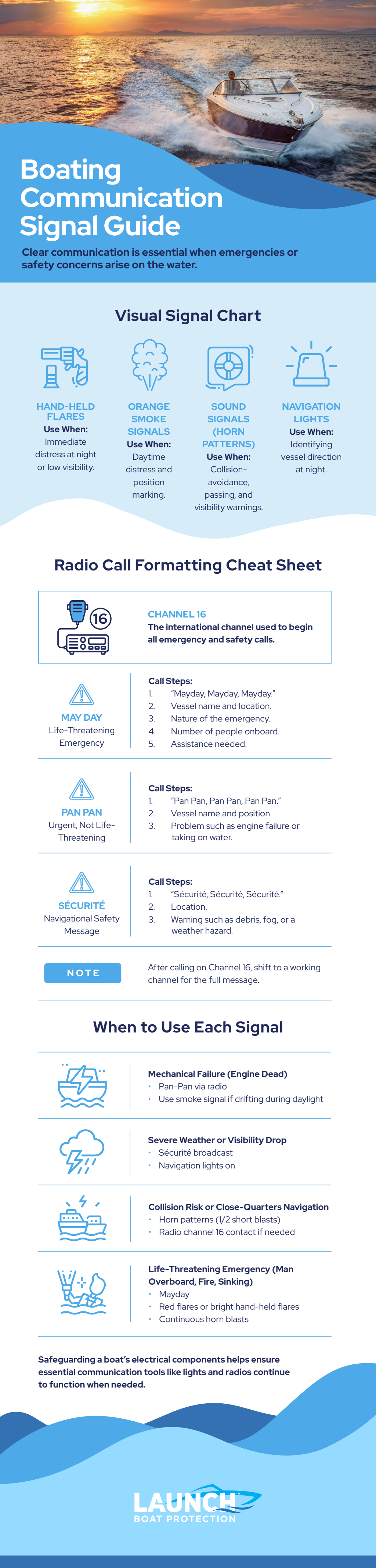
Boat horns and whistles are used to communicate intentions with nearby vessels, especially where visibility is limited or traffic is heavy. One short blast generally signals an intention to pass on the port side, while two short blasts indicate passing on the starboard side. Three short blasts often communicate that a vessel is operating in reverse. Long blasts may be used when leaving a dock, approaching a blind bend, or signaling presence in reduced visibility.
Know Visual Communication Methods
Visual signals become especially valuable when sound cannot be heard clearly. Navigation lights help other boaters identify a vessel’s direction after sunset or during periods of reduced visibility. Day shapes, flags, and emergency distress signals also provide valuable information under specific conditions.
Hand signals can improve communication between passengers while docking, launching, or retrieving a boat. Agreeing on simple gestures before departure helps avoid misunderstandings when engine noise makes conversation difficult.
Prepare for Emergencies
Every family should know how to communicate during an emergency. A properly functioning marine VHF radio provides an effective way to contact nearby vessels or emergency responders when assistance is needed. Cell phones may be useful near shore but should not replace marine communication equipment. Passengers should understand where emergency equipment is stored and who is responsible for using communication devices if the operator becomes unable to do so.
Combine Communication With Regular Boat Maintenance
Reliable communication equipment performs best when it receives routine inspection. Batteries should remain fully charged, radios should be tested periodically, and signaling devices should stay in good working condition before every trip.
Families should also review maintenance records and manufacturer recommendations throughout the boating season. Some owners work with boat warranty companies to help manage eligible repair costs for covered systems, allowing them to focus on keeping their vessel ready for safe operation.
Strong communication habits and well-maintained equipment create a safer boating experience. By learning common sound signals, recognizing visual markers, preparing for emergencies, and maintaining onboard communication devices, families can enjoy more days on the water. Check out the infographic below to learn more.