
How AI Is Modernizing Legal Medical Record Reviews
Key Takeaways
- AI significantly reduces the time needed for medical record retrieval and analysis.
- Automated systems enhance accuracy by minimizing human errors.
- AI tools can identify and highlight critical information within extensive medical records.
- The integration of AI into legal processes leads to cost savings and increased efficiency.
The integration of Artificial Intelligence (AI) into medical record analysis is driving transformative change in the legal industry. For attorneys and legal professionals, sifting through exhaustive medical documentation can be daunting and resource-intensive. By leveraging advanced AI solutions, legal teams streamline this critical phase of casework, accelerating processes and raising precision standards. Modern approaches to medical records review for attorneys increasingly rely on these technological advancements, offering a powerful advantage in handling complex cases.
AI-powered platforms are transforming legal case preparation by significantly reducing the time needed to review medical records. These tools allow legal professionals to efficiently identify, organize, and extract important data, thereby enhancing accuracy and cost efficiency in litigation. As medical litigation grows in complexity, automated review systems provide a competitive edge by minimizing manual tasks. Additionally, these advancements facilitate intelligent prioritization, enabling legal teams to concentrate on deeper analysis while ensuring ethical oversight of AI applications.
The Traditional Challenges in Medical Record Reviews
Legal professionals have traditionally faced significant hurdles in reviewing medical records. The task involves examining mountains of documentation, deciphering complex terminology, and ensuring no critical information is overlooked. Time constraints and the pressure to avoid errors compound these challenges, often resulting in prolonged case timelines and increased operational costs. Ensuring a comprehensive, error-free review has historically required substantial time, effort, and specialized knowledge, stretching legal resources thin.
AI-Powered Solutions Transforming the Landscape
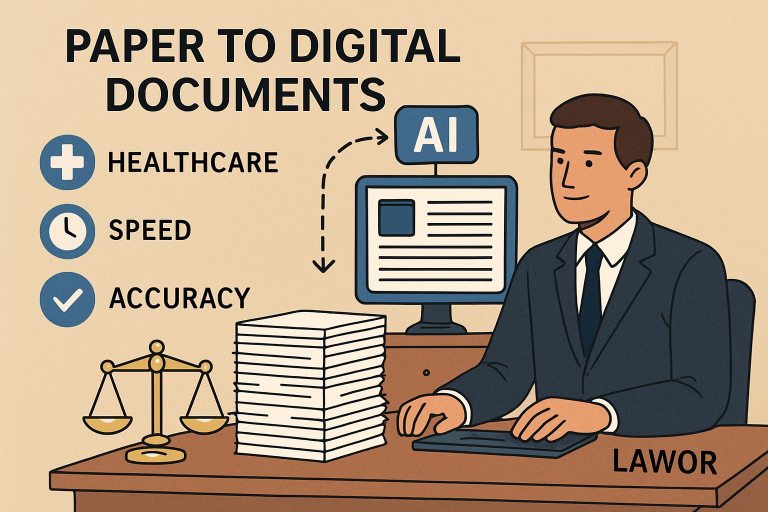
Enter AI-powered solutions, radically shifting the medical record review process. Machine learning-driven platforms can automatically retrieve, categorize, and analyze medical records at speeds beyond human capability. According to InPractice, some tools have reduced industry-standard retrieval times from an average of 45 days to less than 24 hours, completely redefining case preparation cycles. Automated text recognition and natural language processing (NLP)—similar to technologies used in an AI medical scribe—allow these systems to detect and highlight crucial facts, supporting legal arguments with unmatched accuracy.
Enhancing Accuracy and Efficiency
The impact of AI on accuracy and efficiency cannot be overstated. Advanced algorithms dissect intricate medical histories and treatments, systematically extracting all pertinent information. Legal teams are alerted to critical dates, medications, diagnoses, and provider notes within seconds. These improvements reduce human error and ensure that legal arguments are based on complete, reliable data. As a result, lawyers can spend less time on document management and more time refining case strategies and representing their clients effectively.
Cost Savings and Resource Optimization
AI-driven automation in medical record review also yields significant cost savings. Automating repetitive, labor-intensive review tasks liberates senior staff for higher-value analytical work, thereby optimizing resource allocation. Additionally, these platforms minimize the financial risks associated with omissions or inaccuracies by providing comprehensive, cross-checked reviews. This shift enables firms to scale operations more efficiently and handle higher caseloads without overwhelming internal teams or sacrificing quality.
Real-World Applications and Success Stories
Adoption stories from prominent law firms illustrate the tangible benefits of AI in action. For instance, when medical record retrieval times dropped from an industry average of 45 days to under 24 hours, teams reported drastic improvements in workflow and client satisfaction. AI-powered review solutions are credited with boosting win rates, reducing costs, and enabling legal staff to devote more time to other high-impact activities. These examples highlight how AI is no longer a futuristic wish but a practical, everyday solution.
Addressing Potential Risks and Ethical Considerations
As with any cutting-edge technology, integrating AI into legal medical record reviews introduces new considerations. Data privacy stands at the forefront, requiring strict compliance with laws such as HIPAA and careful safeguarding of sensitive information. There are also concerns regarding algorithmic bias or errors if AI tools are not properly monitored. Ongoing human oversight is essential to ensure the ethical use of AI and to address anomalies or unusual findings that demand professional judgment.
The Future of AI in Legal Medical Record Reviews
The future of AI-enabled medical record review for legal professionals is set to become even more impressive. Emerging technologies are expected to deliver smarter interfaces, greater personalization, and near-instant analysis at a larger scale. Next-generation capabilities will enable law firms to seamlessly integrate AI solutions at every stage of case development, from intake to courtroom presentation.
The adoption of AI in the legal domain is an ongoing journey. Law firms that embrace these innovations will enjoy not only faster turnaround times and improved client outcomes but also enhanced internal efficiency and morale. With thoughtful governance to address risks, AI empowers legal professionals to achieve higher standards of service and deliver better results in the evolving legal landscape.


